

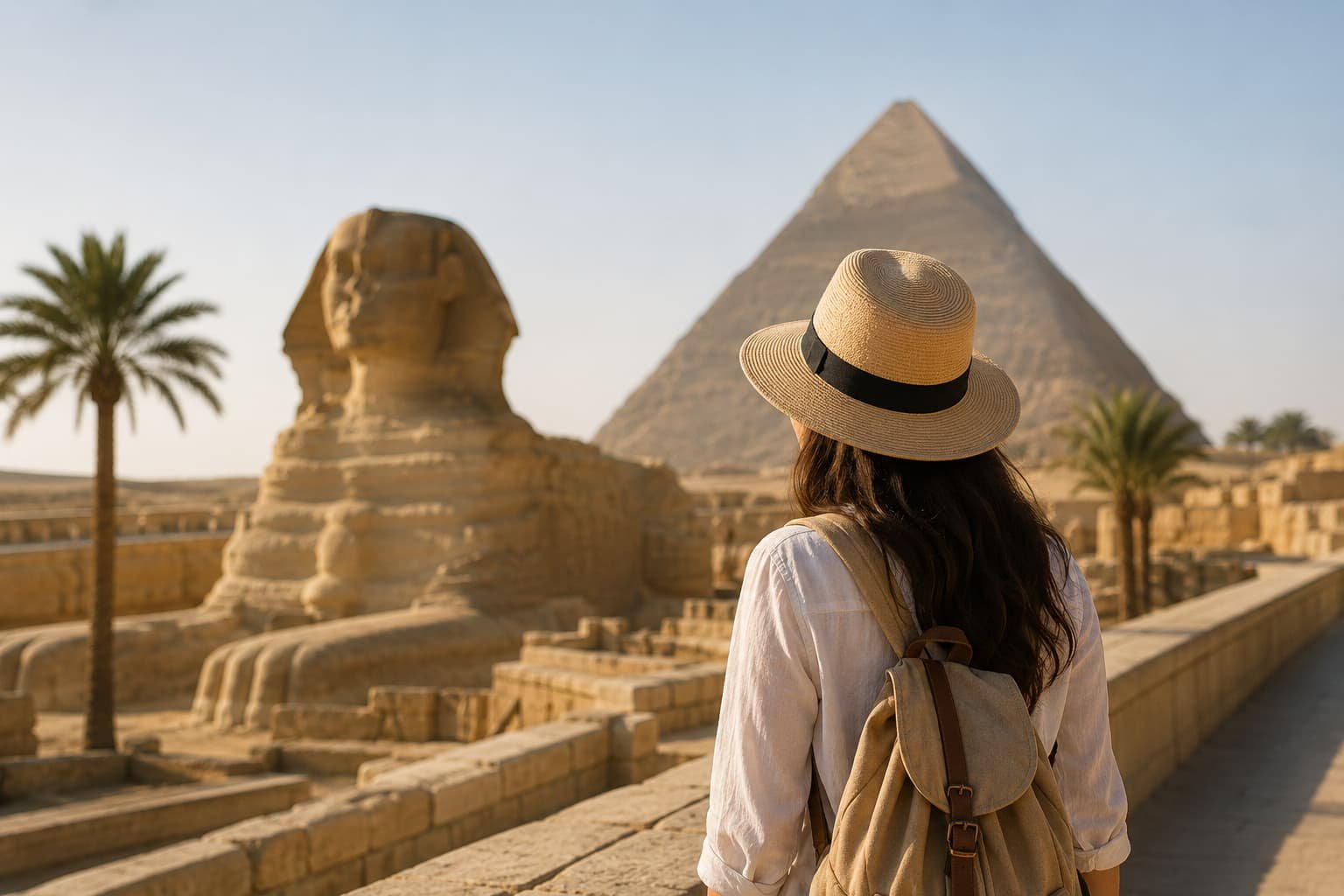
Traveling to Egypt as a woman can be an unforgettable experience. From standing in front of the pyramids and exploring ancient temples to sailing the Nile between Luxor and Aswan, Egypt offers experiences that are difficult to find anywhere else.
At the same time, female travelers, especially women visiting from the United States and Canada, may experience a type of attention that feels unfamiliar, including staring, persistent comments, unwanted approaches, aggressive selling, or, in some cases, physical harassment.
The goal of this guide is not to discourage you from visiting Egypt. Instead, it is to help you understand what you may encounter and give you practical ways to handle unwanted attention confidently and safely.
Is Harassment a Problem for Female Travelers in Egypt?
Yes. Harassment of women, including foreign visitors, is recognized as an issue in Egypt. The U.S. Department of State specifically notes that harassment can include vulgar comments or gestures, indecent exposure, and unwanted physical contact.
However, it is important to put this into perspective. Millions of travelers visit Egypt every year, and most tourist experiences are trouble-free. The experience can also vary considerably depending on where you are, whether you are traveling alone or with a group, and how you arrange transportation and sightseeing.
A well-organized itinerary, reputable transportation, and a knowledgeable local guide can make a significant difference.
What Kind of Attention Might You Experience?
Not every uncomfortable interaction is harassment. Some situations are simply part of the cultural differences you may notice while traveling.
You may experience:
- People staring or looking at you for longer than you are used to.
- Someone asking where you are from.
- Vendors repeatedly asking you to visit their shop.
- Taxi drivers or street vendors approaching you aggressively.
- Someone asking to take a photograph with you.
- Unwanted comments or flirting.
- Someone following you for a short distance.
- Unwanted touching or other physical contact.
The important distinction is how the person responds when you establish a boundary.
You do not have to continue a conversation simply because someone is being friendly. And you do not need to smile, explain yourself, or apologize for saying no.
1. Learn to Say “No” Clearly
One of the most useful skills for dealing with unwanted attention in Egypt is learning to give a firm response.
A simple:
“No, thank you.”
is often enough.
If the person continues, become more direct:
“No. Please leave me alone.”
You do not need to provide an explanation.
If you are being approached by vendors, you can also keep walking rather than stopping to negotiate. Continuing to engage can sometimes encourage the conversation to continue.
For women who are accustomed to being particularly polite, this may feel uncomfortable at first. But protecting your personal boundaries is more important than worrying about appearing rude.
The U.S. Department of State similarly recommends using firm body language and a clear voice when dealing with unwanted attention.
2. Don't Be Afraid to Make Your Boundary Visible
Your body language can communicate a lot.
If someone is making you uncomfortable:
- Make eye contact briefly.
- Use a firm voice.
- Step away.
- Do not engage in unnecessary conversation.
- Move toward other people or staff.
- Ask your guide or tour leader for assistance.
If the situation becomes threatening, raising your voice and drawing attention to the situation can be appropriate. Your safety is more important than maintaining social politeness.
3. Dress for the Destination
Egypt is a diverse country, and clothing expectations can vary between tourist resorts, major cities, religious sites, villages, and rural areas.
You do not need to dress in traditional Egyptian clothing. However, dressing somewhat more conservatively can make moving around different parts of the country more comfortable.
For sightseeing, many female travelers prefer:
- Loose trousers or long pants.
- Midi or maxi skirts.
- T-shirts or tops that cover the shoulders.
- Lightweight shirts or blouses.
- A scarf for visiting mosques.
- Comfortable clothing suitable for Egypt's weather.
The UK government advises female travelers to dress modestly, particularly in rural areas, markets, and religious locations.
Think of clothing as a way to adapt comfortably to the environment—not as a guarantee against harassment. Harassment is never the victim's fault, regardless of what she is wearing.
4. Be More Careful When Traveling Alone at Night
Solo travel can be rewarding, but nighttime is a good time to become more cautious.
If you are traveling alone:
- Avoid walking through unfamiliar areas late at night.
- Arrange your transportation in advance.
- Stay in busy, well-known areas.
- Tell someone you trust where you are going.
- Keep your phone charged.
- Use reputable transportation rather than accepting random offers from strangers.
The U.S. Department of State recommends arranging airport transportation in advance and researching transportation providers, particularly for women traveling alone.
This is especially useful when arriving in Egypt for the first time and dealing with airport transfers.
5. Use Organized Sightseeing When You Want Extra Peace of Mind
For first-time visitors, having a professional Egyptologist guide can make sightseeing much easier.
Instead of trying to negotiate transportation, tickets, directions, and vendors independently, your guide can help you navigate the destination and communicate with local people when necessary.
This can be particularly helpful at busy archaeological sites and markets where vendors may approach tourists.
At major tourist sites, tourist police are also available, and the U.S. State Department notes that they can assist visitors who find themselves in uncomfortable situations.
6. Don't Give Strangers Your Hotel Details
You generally do not need to tell someone you have just met:
- Which hotel you are staying at.
- Your room number.
- Your exact itinerary.
- Whether you are traveling alone.
- When you will be returning to a particular location.
If someone asks where you are staying, a simple “I'm not sure” or “I'm meeting my group” is enough.
The U.S. Department of State also recommends that women travelers avoid telling strangers where they are staying.
7. Know How to Handle Persistent Vendors
Aggressive selling can sometimes feel like harassment even when it is primarily commercial.
At popular tourist attractions, you may hear:
- “Come into my shop.”
- “Special price for you.”
- “Just look.”
- “Where are you from?”
- “Free gift!”
If you are not interested, you do not have to stop.
Try:
“No, thank you.”
Then keep walking.
If someone continues following you, move toward your guide, hotel staff, security personnel, or another populated area.
The U.S. State Department warns that tourists can encounter aggressive vendors and scams in tourist areas, including situations involving supposedly “free” gifts.
8. What If Someone Touches You?
Unwanted physical contact should be taken seriously.
If someone touches you without your permission, step away immediately and use a clear, loud statement such as:
“Don't touch me.”
Move toward a safe, populated location and tell your guide, tour leader, hotel manager, security personnel, or the police if necessary.
You do not need to minimize the incident because you are a visitor.
If the situation is serious, document what happened as safely as possible and seek assistance promptly.
9. Traveling on the Nile: What Female Travelers Should Know
A Nile cruise or dahabiya journey can actually provide a more structured travel experience because accommodation, transportation, meals, and sightseeing are organized around the cruise itinerary.
For women traveling alone or with friends, this can reduce the need to navigate unfamiliar transportation independently.
When choosing a Nile cruise, consider:
- Whether transfers are included.
- Whether sightseeing is accompanied by a professional guide.
- How the cruise handles guest assistance.
- Whether there is a tour leader or local representative.
- How shore excursions are organized.
A reputable operator should make it clear who you can contact if you need assistance during the journey.
10. If You Feel Uncomfortable, Leave the Situation
You do not need to determine whether someone's behavior technically qualifies as harassment before deciding to remove yourself.
If something feels wrong:
Trust your instincts.
Walk into a hotel, restaurant, shop, museum, cruise reception area, or another populated place.
If you are traveling with a tour company, contact your tour leader or local representative.
Your personal safety comes before finishing the sightseeing activity.
11. What to Do in a Serious Situation
If unwanted attention becomes threatening, involves physical assault, or you believe you are in immediate danger, seek help immediately.
Egypt has a tourist police service, and the UK government's current Egypt travel guidance lists 126 as the tourist police number and 122 for police.
For U.S. travelers, contacting the U.S. Embassy or Consulate can also be appropriate in serious incidents. The U.S. Department of State advises victims of sexual assault to seek medical care and contact the embassy or appropriate local resources.
Canadian travelers should keep the contact details for the Canadian embassy or consular services accessible throughout their trip.
For any emergency, your tour operator should also be one of your first points of contact if you are traveling on an organized itinerary.
12. The Best Strategy: Prepare, Don't Panic
The most useful approach to harassment egypt female travelers may be preparation rather than fear.
Before your trip:
- Save your hotel and tour operator's contact information.
- Keep your phone charged.
- Share your itinerary with someone you trust.
- Arrange airport transfers in advance.
- Choose reputable transportation.
- Learn a few simple Arabic phrases.
- Dress appropriately for the places you plan to visit.
- Stay aware of your surroundings.
- Know how to contact local emergency services.
- Trust your instincts.
These simple steps can help you feel more confident without allowing concerns about harassment to overshadow your trip.
Useful Arabic Phrases for Female Travelers
Learning a few Arabic expressions can be surprisingly helpful.
La, shukran — No, thank you.
La — No.
Khalas — Enough / That's enough.
Matelmasheeni — Don't follow me.
Matelmasneesh — Don't touch me.
You do not need to speak Arabic fluently. A firm tone and clear body language are often more important than perfect pronunciation.
Final Thoughts: Enjoy Egypt With Confidence
Egypt deserves to be experienced for more than the uncomfortable moments that can sometimes happen while traveling.
Walk through ancient temples, watch the sunset over the Nile, explore Cairo's historic streets, discover Nubian culture in Aswan, and take the time to experience the country beyond the headlines.
At the same time, travel confidently and intelligently. Know your boundaries, choose reliable transportation, stay aware of your surroundings, and don't hesitate to ask for help if something makes you uncomfortable.
For female travelers from the United States and Canada, preparation can make the difference between feeling uncertain and feeling in control.
You don't have to travel fearfully. You simply need to travel prepared.

