

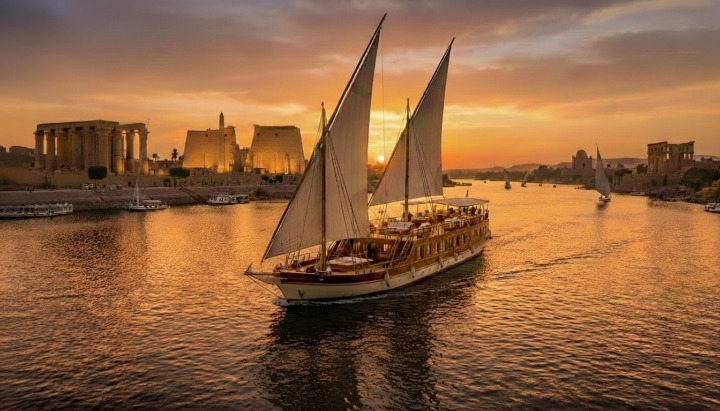
Few trips in Egypt make as much sense as a Nile cruise. You unpack once, and the temples come to you. But the search results are crowded with catalogues of ships and "from" prices, and almost none of them tell you which cruise suits you.
This guide does that. It covers the main types of cruise, the best route and length, when to go, and what to check before you pay. By the end you should know what to ask for.

Which Nile cruise is best for you? A quick answer
The best Nile river cruise depends on how you like to travel. As a starting point:
- First-timer who wants the classics: a Luxor to Aswan cruise of four or five nights on a standard cruise ship.
- Privacy and a slower pace: a dahabiya, a small sailing-style boat.
- Remote temples and fewer crowds: a Lake Nasser cruise.
- Seniors or travellers with limited mobility: a ship with lifts and an easy-access cabin. Confirm the details with the operator in advance.
- Short on time: a shorter cruise works, but it will feel rushed.
The sections below explain why.
Ship, dahabiya, Lake Nasser or felucca?
"Nile cruise" covers several very different experiences. Choosing the right type matters more than choosing a particular boat.
Standard cruise ships
These are the most common option. Think of them as floating hotels, with dining rooms, a sun deck and often a pool. Higher-end ships have bigger cabins and more facilities. More affordable ships are still comfortable, but meals tend to be buffet-style rather than à la carte. Ship size varies, so compare vessels rather than assuming all "5-star" labels mean the same thing.
Dahabiyas
A dahabiya Nile cruise is a smaller, traditional-style vessel. Private operators describe them as having roughly ten cabins, which gives a very different atmosphere from a large ship: quieter, more personal, and more flexible about where you stop. The trade-off is fewer facilities and less onboard entertainment.
Lake Nasser cruises
These sail on the lake south of Aswan, away from the classic Luxor–Aswan stretch. They suit travellers who have already seen the main temples, or who want a quieter itinerary built around sites such as Abu Simbel.
Feluccas
A felucca is a basic sailing boat. You sleep on deck, and not all of them have toilets on board. It's charming for a short sail, but it isn't what most people picture when they book a cruise.
Luxor to Aswan or Aswan to Luxor?
Most Nile cruises run between Luxor and Aswan, and you will see the same sights in either direction. The practical differences are small but worth planning around:
- Starting in Luxor: if a sunrise hot-air balloon ride over the Nile and the Valley of the Kings is on your list, you can usually fit it in before boarding. It's a very early start, so don't schedule a full day of sightseeing straight after.
- Starting in Aswan: many travellers add an early-morning trip to Abu Simbel, reached by car (about three hours) or a short flight. Ask your operator how it fits with your sailing times.
On length, four nights is the minimum most operators sell, and five days and four nights is often recommended as the point where the trip stops feeling rushed. The opposite risk applies if you dislike fixed schedules. Some travellers find a week-long cruise restrictive, so a shorter cruise plus land touring may suit you better.
What you will see along the way
A classic itinerary runs through four main stops:
- Luxor: Karnak Temple, Luxor Temple, the Valley of the Kings and Hatshepsut's temple, plus the Colossi of Memnon.
- Edfu: the Temple of Horus, one of Egypt's best-preserved temples.
- Kom Ombo: an unusual temple dedicated to two gods, Sobek and Horus, with a crocodile museum nearby.
- Aswan: the Philae Temple (the temple of Isis), the High Dam, the Nubian villages and the Unfinished Obelisk, plus the gateway to Abu Simbel.
Between stops, the cruise itself is part of the appeal. You pass villages and farmland along the banks, and some monuments are lit up at night.

The best time for a Nile cruise
For most visitors, the best time to visit Egypt and cruise the Nile runs from October to April, when days are milder and sightseeing is easier. Summer can be intensely hot. In the hottest months, temperatures can exceed 100°F (38°C), which makes midday visits hard going.
Cooler months also bring cooler evenings, so pack a layer for the deck. Popular holiday periods tend to book early, so ask your operator which weeks are busiest for your chosen ship.
Nile cruise prices: what to compare
Rather than quote figures that go out of date, here is what actually drives the price:
- Ship category: high-end ships, mid-range ships and dahabiyas sit in different price tiers.
- Length: a three-night, four-night or seven-night cruise changes the cost and the number of sites.
- Season: peak weeks cost more.
- Inclusions: meals, drinks, guides and entrance fees may or may not be in the quote.
The most useful habit is to compare like for like. Before booking, check whether the price includes:
- Entrance fees to temples and sites
- Drinks on board
- Tips for guides and crew
- Any single-room supplement if you're travelling alone
- Optional extras such as Abu Simbel or a balloon ride
- Flights and visa costs, which are normally separate
A cruise that looks cheaper often leaves several of these out.
What a Nile cruise is really like
A cruise is not perfect for everyone, so here is the honest version.
The good: you unpack once, you wake up at a new site, and a licensed Egyptologist guide can bring the temples to life.
The trade-offs: schedules are fixed, groups move at a group pace, and early starts are common. On busy docks, ships can moor side by side, so you may walk through another vessel to reach the shore. Wi-Fi on board can be unreliable.
If you value total flexibility, a mix of cruise and land touring, or a dahabiya, may suit you better than a large ship.
How to compare Nile cruise ships
When you have a shortlist, put these questions to each operator:
- How many cabins does the vessel have, and how big are they?
- When was it built or last refurbished?
- Is the cabin river-facing, and on which deck?
- Are meals buffet or à la carte?
- Is a private Egyptologist guide included, or a shared group guide?
- What are the mobility arrangements (lifts, gangways, access at sites)?
- What exactly does the price include?
A good operator will answer these clearly. If the answers are vague, that tells you something.
Is a Nile cruise safe?
Nile cruises are a long-established way to see Upper Egypt, and ships follow safety procedures on board. Conditions can change, so check your government's current travel advice before you book, and ask your operator about onboard safety, medical support and security arrangements. A reputable operator should be happy to explain.
Nile cruise FAQ
How many days do you need for a Nile cruise?
Four nights is the usual minimum, and five days and four nights is a good balance between sightseeing and relaxation.
Is a Nile cruise worth it?
For most first-time visitors to Luxor and Aswan, yes. You cover the main sites without repeated packing. If you want complete flexibility, land touring may suit you better.
Is Abu Simbel included in a Nile cruise?
Not always. It's usually an optional extra by car or flight, so check the itinerary.
Dahabiya or cruise ship: which is better?
A dahabiya suits travellers who want privacy and a slower pace. A cruise ship suits those who want more facilities and a larger range of options.
Plan your Nile cruise with confidence
The best Nile river cruises aren't the ones with the longest list of features. They're the ones that match your pace, your dates and your budget, and that are clear about what's included.
Start with the type of cruise, then the route and length, then compare ships using the questions above. If you'd like help narrowing it down, send us your travel dates, group size and preferences and we'll suggest options that fit.

