


A Nile cruise is one of the most memorable ways to see Upper Egypt, but most sailings last only three to seven nights. That leaves a question many travellers ask once they start planning: what do you do with the rest of the trip? The popular answer is a "cruise and stay" holiday, where the river journey is paired with extra nights in Cairo or on the Red Sea coast.
The short version: add Cairo if you want the pyramids, the museums and the historic city, and add the Red Sea if you want beaches, snorkelling and a slower pace after days of temple visits. Many longer trips do both. This guide explains how each combination works, how to order it, how to travel between the pieces, and what to ask before you book.
What Is a Nile Cruise and Stay Holiday?
A Nile cruise and stay holiday combines a Nile cruise between Luxor and Aswan, typically three, four or seven nights, with additional nights at a hotel or resort. The "stay" is usually in Cairo, on the Red Sea coast (Hurghada, Sharm El Sheikh or Marsa Alam), or in both.
The idea works because the destinations complement each other. The Nile gives you temples, tombs and river life. Cairo gives you the Pyramids of Giza and the layered history of the capital. The Red Sea gives you sun, sea and rest. Instead of planning three separate trips, you get one itinerary with a clear rhythm.
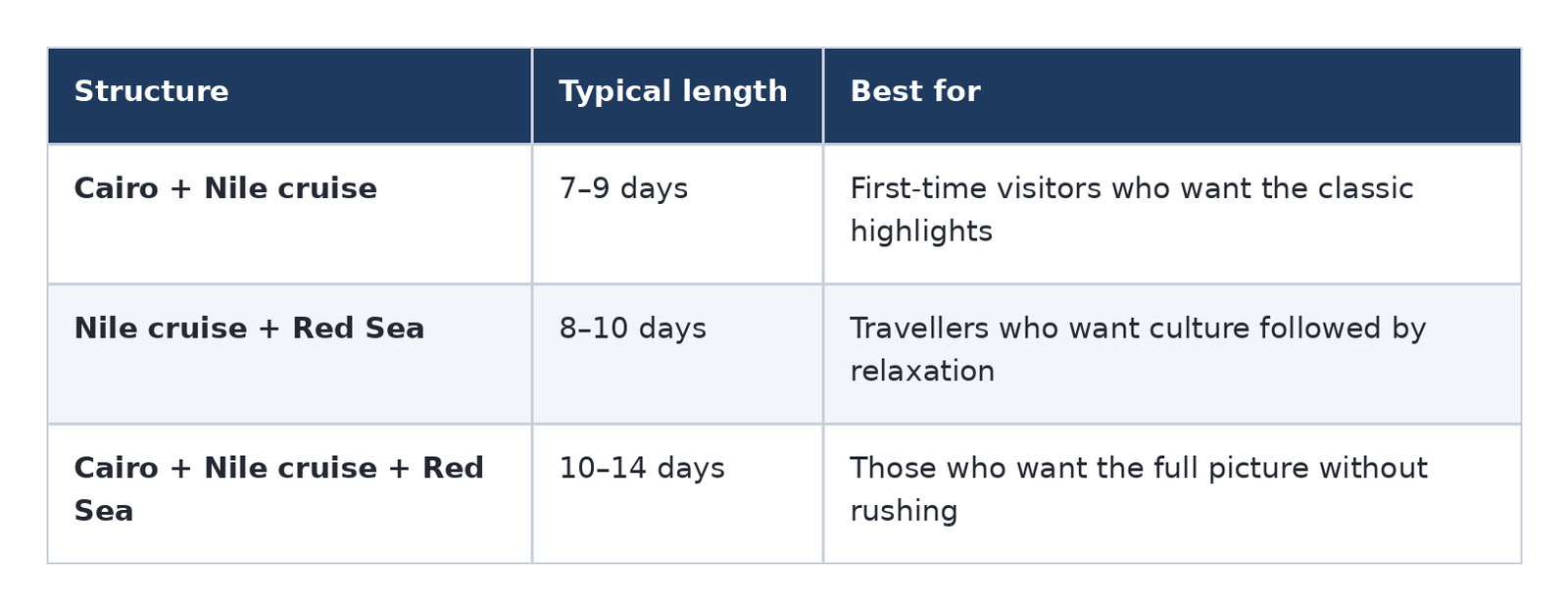
Most cruise and stay itineraries follow one of three shapes:
If you are still comparing cruise options before adding a stay, these Nile cruise packages are a useful place to start.
Adding Cairo to Your Nile Cruise
Most international visitors arrive in Egypt through Cairo anyway, so building the capital into the trip is the natural choice. It also gives you the sights that a river cruise cannot: the Giza Pyramids and the Sphinx, the Grand Egyptian Museum, Saqqara, Islamic and Coptic Cairo, and the old bazaar of Khan el-Khalili.
How many nights in Cairo? Two to three nights is the sweet spot. That is enough for Giza, a full museum visit, and a half day in the old city without feeling rushed. One night works only as a transit stop, and you will spend most of it recovering from your flight.
Why people like it: Cairo is intense, busy, and loud. After it, the quiet of a Nile cruise feels like a reward. Seeing the capital first also means you tackle the most crowded sites while your energy is high.
Getting south: Cairo connects to Luxor and Aswan by domestic flight, usually around an hour to an hour and a half in the air. Flights are frequent, so it is easy to match your arrival with the cruise boarding time.
Adding the Red Sea to Your Nile Cruise
A Nile cruise is rewarding but full. Early starts, temple visits and strong sun add up, and by the final morning most travellers are ready to slow down. A few nights by the sea turns the end of the trip into genuine rest.
The three most common Red Sea choices compare like this:
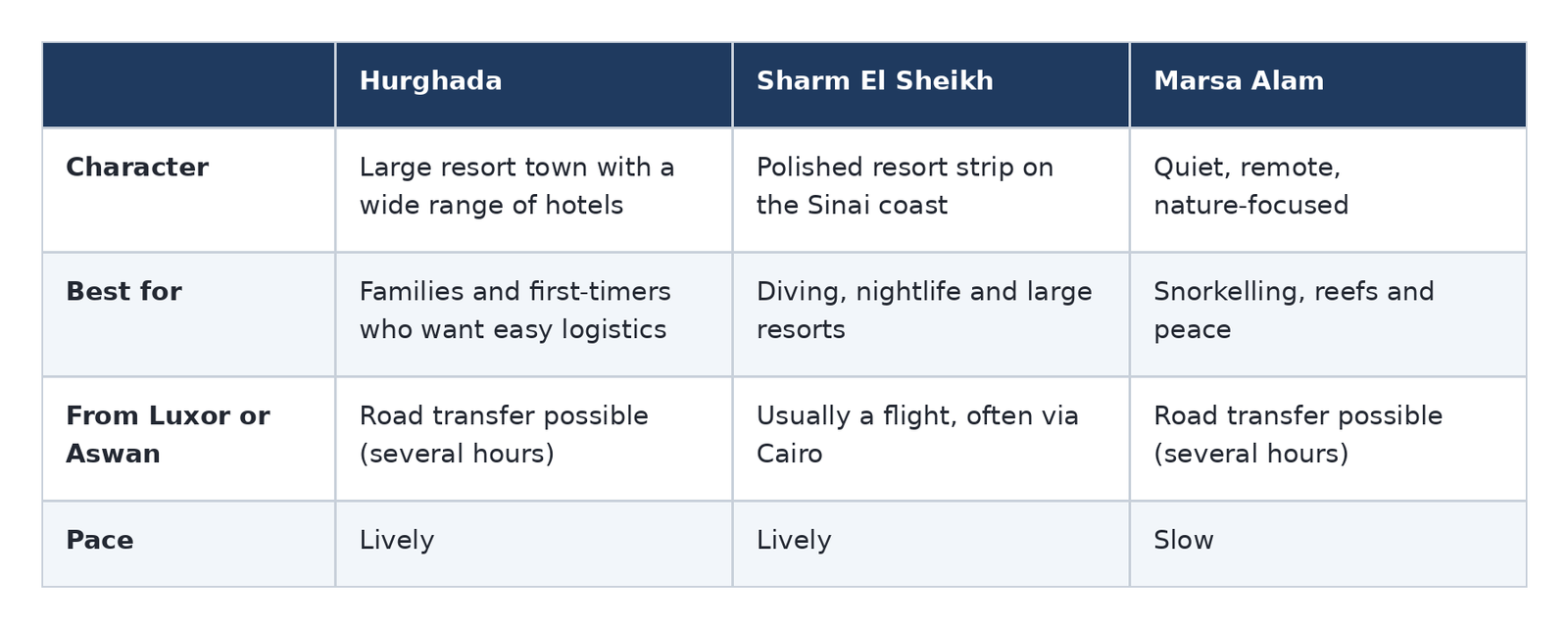
Hurghada is the most common pairing because it is the easiest to reach from Luxor. El Gouna, a marina-style town just north of Hurghada, is a calmer alternative with the same airport. Marsa Alam suits travellers who care more about the reef than the resort. Sharm El Sheikh works best when you are happy to take a flight and want the Sinai coastline.
Whatever you pick, choose the hotel board basis deliberately. All-inclusive is convenient after a trip where meals were scheduled around excursions, but half board can leave more room to eat out.
Cruise First or Beach First?
The classic order is Cairo, then the Nile cruise, then the Red Sea. There are good reasons for it:
• You do the demanding sightseeing while you are fresh.
• The beach becomes a buffer between the cruise and the journey home.
• Many European and Gulf flights operate directly from Hurghada and Sharm El Sheikh, so ending at the coast can save you a domestic flight on departure day.
The reverse order, beach first, can suit travellers arriving at a Red Sea airport who want to recover from a long flight before the cruise. It also works if you would rather finish in Cairo and fly home from there. The main drawback is that you reach the busiest, most tiring part of the trip after your holiday has already started to feel like a holiday.
One practical rule applies to every order: do not plan a tight connection on the morning you leave the ship. Cruises disembark in the morning, but delays happen, and a relaxed transfer is better than a missed flight.
Getting From the Nile to the Red Sea
There are three realistic ways to cross from the river to the coast:
1. Private road transfer. From Luxor to Hurghada is typically a four-to-five-hour drive, depending on route and stops. Marsa Alam is also reachable by road from the Edfu and Aswan side, again with several hours on the road. This is the simplest option for Hurghada and Marsa Alam because there is no airport routine.
2. Domestic flight via Cairo. Common for Sharm El Sheikh. It adds airport time and a connection, so allow a full day.
3. A mix of both. For example, a road transfer to the coast and a flight home from Hurghada or Sharm El Sheikh.
Times and flight schedules change with the season, so confirm them with your operator before building the rest of the itinerary around them.
Sample Itineraries
7 days: Cairo and a 3-night Nile cruise
• Day 1: Arrive in Cairo
• Day 2: Giza Pyramids, Sphinx and a museum visit
• Day 3: Fly to Aswan, board the ship, visit Philae and the High Dam
• Day 4: Kom Ombo and Edfu while sailing
• Day 5: Luxor: Valley of the Kings, Hatshepsut Temple and Karnak
• Day 6: Disembark, Luxor Temple, then fly back to Cairo
• Day 7: Departure
10 days: Cairo, Nile cruise and Red Sea
• Days 1–2: Cairo
• Days 3–6: 3-night cruise from Aswan to Luxor
• Days 6–9: Road transfer to Hurghada and relaxing beach days
• Day 10: Departure from Hurghada
Finishing in Luxor and driving to the coast keeps the travel logical, because you are moving north-east instead of doubling back.
14 days: the full picture
• Days 1–3: Cairo, including Saqqara and Old Cairo
• Days 4–10: 7-night cruise between Aswan and Luxor, with more time at each site and, depending on the operator, extra stops such as Abu Simbel
• Days 11–13: Red Sea stay
• Day 14: Departure
What Does a Nile Cruise and Stay Cost?
Prices vary too much to quote a single figure honestly, but the structure of the cost is predictable. The main drivers are:
• Cruise category and length: a standard ship, a luxury ship, and a private sailing boat sit in different price bands, and a seven-night cruise costs more than a three-night one.
• Hotel standard and number of nights: especially on the Red Sea, where resort quality varies widely.
• Transport: domestic flights, private transfers and airport pickups.
• Private or group touring: a private guide and vehicle cost more than a shared tour.
• Season: December and January holidays are usually the most expensive.
• Extras: Abu Simbel, a balloon flight, optional dinners, and tipping.
When you compare quotes, compare like with like. Check the board basis, the number of included excursions, whether entrance fees are covered, and whether domestic flights are in the price. A lower headline price often has a longer list of exclusions.
Best Time for a Nile Cruise and Stay
The most comfortable window is generally October to April. Upper Egypt can be extremely hot in summer, with temperatures often above 40°C, which makes temple visits difficult by midday. The Red Sea is more forgiving in warm months, but the cruise is the reason most people travel, so it makes sense to plan around it.
Winter is the most popular season and also the most expensive, particularly around Christmas and New Year. Shoulder months such as late October, early November and March often give a good balance of weather and availability. For a month-by-month breakdown, see this guide to the best time to visit Egypt.
Choosing Your Nile Cruise Type
The style of boat shapes the whole holiday, so decide it before you pick the stay.
• Standard cruise ships: larger vessels with more facilities, such as a pool, lounge, restaurant and sun deck. They suit travellers who like variety and social space.
• Luxury cruise ships: more space, higher service levels and better dining. A good fit for honeymooners and anyone who wants the cruise to feel like a hotel stay.
• Dahabiyas: traditional sailing boats with only a handful of cabins. They are quieter, more private, and slower, and they reach calmer stretches of river. If you want a smaller, more intimate experience, look at a dahabiya Nile cruise.
A dahabiya pairs especially well with a quiet Red Sea base such as Marsa Alam, because both choices point to the same kind of holiday.
Package or Book Separately?
Booking each part yourself gives maximum flexibility, but a cruise and stay trip has several moving pieces: cruise boarding times, domestic flights, hotel check-ins, and transfers between all of them. A single delay can ripple through the rest.
A package offers one itinerary, coordinated transfers, and one point of contact if something changes. The trade-off is less freedom to improvise. For multi-stop trips, many travellers find that coordination alone is worth it. If you want to see how a complete itinerary can be structured, browse these Egypt tour packages.
Who Is This Holiday For?
• Couples and honeymooners: culture first, then a few days of rest, with a luxury or dahabiya cruise for extra privacy.
• Families: Hurghada works well because of its resorts and short list of logistical steps. A shorter cruise keeps children comfortable.
• Older travellers: fewer hotel changes and a slower pace matter more than squeezing in every site.
• Repeat visitors: a dahabiya plus Marsa Alam is a way to see a different side of Egypt.
• First-timers: the Cairo, Nile and Red Sea order is a safe, proven structure.
Frequently Asked Questions
How long should a Nile cruise and stay be?
Most travellers find eight to ten days comfortable if they combine the cruise with either Cairo or the Red Sea. If you want Cairo, a Nile cruise and a beach stay, twelve to fourteen days avoids rushing.
Can you combine a Nile cruise with a Red Sea holiday?
Yes. It is one of the most common itineraries. The cruise ends in Luxor or Aswan, and you then travel to the coast by road or by flight.
Is Hurghada or Sharm El Sheikh better after a Nile cruise?
Hurghada is usually easier because it can be reached from Luxor by road. Sharm El Sheikh is a good choice if you prefer its resorts and diving, but expect to fly, often through Cairo.
Should I do the Nile cruise or the beach first?
For most travellers, the cruise first and the beach last is better. You do the demanding sightseeing early and finish with rest. Ending on the coast can also save a domestic flight if you depart from Hurghada or Sharm El Sheikh.
How do you get from Luxor to Hurghada?
The most common method is a private road transfer, which typically takes around four to five hours. Confirm timings with your operator, as they depend on pickup point and route.
Is a cruise and stay package worth it?
It usually is for trips with three or more stops, because transfers and timing are coordinated for you. Booking separately makes sense if you are comfortable managing flights, hotels, and boarding times yourself.
Do I need a visa?
Requirements depend on your nationality and can change, so check the official Egyptian government visa information before you travel.
Final Thoughts
A Nile cruise is the centrepiece of the trip, but the days around it decide how the whole holiday feels. Add Cairo for the pyramids and museums, add the Red Sea for rest, or combine them in a ten-to-fourteen-day itinerary. Whichever route you choose, keep the order logical, leave generous buffers around transfers, and compare quotes carefully.
If you would like help shaping a route that fits your dates, budget, and pace, start by exploring the available Egypt tour packages and send over the combination you have in mind.

