

Every Nile cruise brochure promises luxury: gleaming suites, gourmet dining, a front-row seat to ancient Egypt. Some ships deliver exactly that. Others deliver a very nice hotel on the water with an excellent guide. The word 'luxury' is applied to ships whose prices differ by more than four times, so it helps to know what you're actually paying for. This guide explains what a luxury Nile river cruise really includes, what it doesn't, and where reality differs from the brochure.
The short version
On a typical luxury cruise between Luxor and Aswan, you get a comfortable cabin or suite, full-board meals, a licensed Egyptologist guide and a daily program of temple visits, while the ship does the moving. You don't usually get a fully private tour of every site, drinks included, or the empty temples some photos suggest. Expect roughly $800–$3,500 per person for 3–4 nights depending on the ship and season, with the best weather from October to April.
Real luxury or just a label?
Five questions separate the two: how many guests does the ship carry, how large are the cabins, when was it last refurbished, how is dining served, and are excursions small-group or private? Egyptian star ratings are set locally, so a five-star Nile ship isn't directly comparable to a five-star hotel in New York or Toronto. Treat the stars as a starting point. A ship that answers these questions clearly, in writing, is usually worth considering.
Your cabin
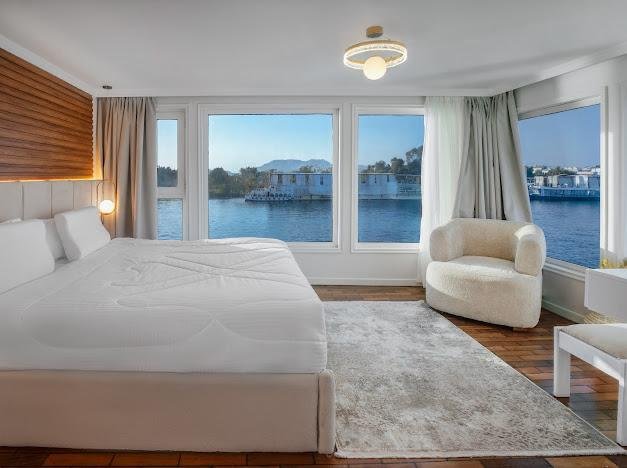
This is where luxury ships earn their price. Cabins on standard five-star ships are comfortable but compact, while luxury ships typically offer larger rooms and a higher share of suites. Many have a private balcony or large picture windows over the river. Ask for the cabin size in square meters, whether it has a balcony or a window, and which deck it's on.
Position matters more than people expect. Ships often moor side by side, so a river-facing window can end up looking at the neighboring ship's deck. Cabins near the engine room, the lounge or the kitchen can be noisier. A good operator will tell you the exact cabin you're booking rather than just the category.
The food
Meals are included on a full-board cruise, usually breakfast, lunch and dinner, with afternoon tea on some ships. Quality ranges from a busy buffet on larger ships to set or à la carte menus on smaller luxury ones, with Egyptian and international dishes. Vegetarian and other dietary needs are generally manageable if you tell the operator in advance, but ask rather than assume. Drinks are the common surprise: water, soft drinks and alcohol are often charged separately, and onboard prices can add up.
The ship and the service
Luxury ships usually offer a sun deck with a pool or plunge pool, a lounge or bar, a small spa and some evening entertainment such as music or a themed night. Staff-to-guest ratios are better on smaller ships, which is much of what you're paying for: someone remembers your name and how you take your tea. Wi-Fi on the river is often slow or patchy, so treat it as a bonus and download what you need before you travel.
The sightseeing
Your daily excursions are led by a licensed Egyptologist and usually include transport to the sites. On most cruises these are small-group tours rather than fully private ones. Private guiding is typically an upgrade, so confirm which you're getting.
The major stops between Luxor and Aswan are Karnak and Luxor Temple, the Valley of the Kings, Hatshepsut's Temple, Edfu, Kom Ombo and Philae, with the High Dam and the Unfinished Obelisk in Aswan. Two realities are worth knowing. First, other ships follow similar schedules, so popular temples can be busy, and early starts are your best defense. Second, the heat is real: sightseeing is built around the mornings, with afternoons for resting or sailing.
A typical day aboard
• Early morning: breakfast, then off to a temple while it's still cool.
• Late morning: back on board as the ship sails.
• Afternoon: lunch, the sun deck, the pool, or a second visit later in the day.
• Evening: dinner, perhaps entertainment, and an early night before the next morning start.
Sailing often happens while you relax or sleep, and delays at river locks, such as the one at Esna, can shift the timetable. The pace is gentle on the body but not always on the schedule.
What the price covers, and what it doesn't
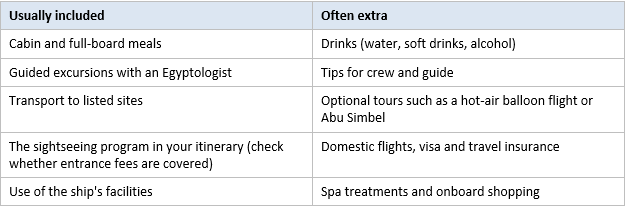
Two cruises with the same headline price can differ by hundreds of dollars once extras are added, so ask for the inclusions in writing.
What it costs
Indicative ranges per person, sharing a double cabin, for 3–4 nights, based on published agency rates. Always confirm current pricing for your dates:
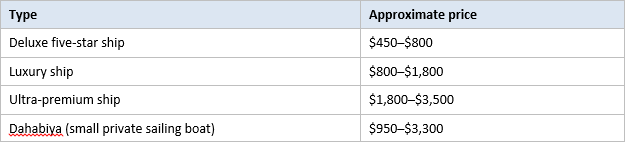
December and January cost the most, and summer costs the least. Solo travelers usually pay a single supplement. Be cautious with 'from' prices, which often describe the cheapest cabin on the cheapest date.
The honest downsides
• Early starts. Many mornings begin before sunrise.
• Heat and crowds. Summer highs in Luxor and Aswan often exceed 40°C (104°F), and popular temples can be busy.
• Shared tours. Most excursions are small-group, not private.
• Limited time at each site. Cruises cover a lot in a few days, so you move on before you've lingered.
• Patchy connectivity. Don't plan on reliable Wi-Fi.
If these bother you, a dahabiya Nile cruise, a longer itinerary or a private land tour may suit you better.
Who it's right for
Luxury cruising suits travelers who want comfort, a clear plan and a base they unpack in once: couples and honeymooners, first-time visitors, and anyone who wants Egypt's highlights without the logistics. Families and multigenerational groups do well on larger ships with pools and flexible cabins. Travelers with limited mobility should ask about gangways, steps and accessible cabins, since temple grounds are uneven. If you prefer independent, unhurried exploration, a cruise may feel too structured.
Questions to ask before you book
• What is the cabin size, deck and position, and can I have the exact cabin number?
• When was the ship last refurbished?
• Are excursions private or shared, and are entrance fees included?
• Which drinks, tips and optional tours cost extra?
• What are the cancellation terms and payment options?
For a fuller pre-trip checklist, see our Egypt travel guide for Americans. Before you go, check passport and visa rules on official Egyptian government sources, review the latest U.S. State Department or Government of Canada travel advisories, and arrange travel insurance with medical cover. Plan a night in Cairo before your domestic flight so jet lag doesn't collide with an early start.
Frequently asked questions
Is a luxury Nile cruise worth it? For most first-time visitors, yes: you unpack once, see the major temples in comfort and have a quiet base after hot mornings. It's less suited to people who prefer independent, slower travel.
How many nights do I need? Four nights from Luxor to Aswan suits most travelers. Three nights works for a tight schedule, and seven nights suits those who want a slower pace.
Is a Nile cruise safe? Tourist itineraries in Egypt are well established. Check current government travel advisories before booking and travel with a licensed operator.
Do I tip? Yes, tipping is customary for the crew and your guide. Ask your operator for current amounts and how crew tips are collected.
Final thoughts
A luxury Nile cruise is, at its best, a calm and well-run way to see Egypt's greatest temples. At its worst it's a label on an ordinary ship. The difference shows up in cabin size, dining, group size and what's included, so compare those first and the ship's name second.
Ready to plan? Tell us your travel dates and group size, and we'll send a tailored shortlist of ships with transparent pricing and a free pre-booking checklist. Contact us today.

