


If you picture a Nile riverboat as one big floating hotel, you’re only seeing half the picture. Egypt’s river carries two very different kinds of boat: the standard cruise ship, built for comfort and scale, and the dahabiya, a traditional sailing houseboat built for slow, private travel. Both sail between Luxor and Aswan and stop at the same temples. What changes is how the days feel. This guide compares them honestly, including the trade-offs most sales pages skip, so you can choose the boat that fits you.
Quick answer
- Choose a standard cruise ship if you want a pool, bar, and lift, a lower price per night, a fixed and predictable schedule, or you’re travelling in a larger group or with limited mobility.
- Choose a dahabiya if you want quiet, privacy, small numbers, and flexible stops, and you’re happy with simpler facilities.
What Is a Standard Nile Cruise Ship?
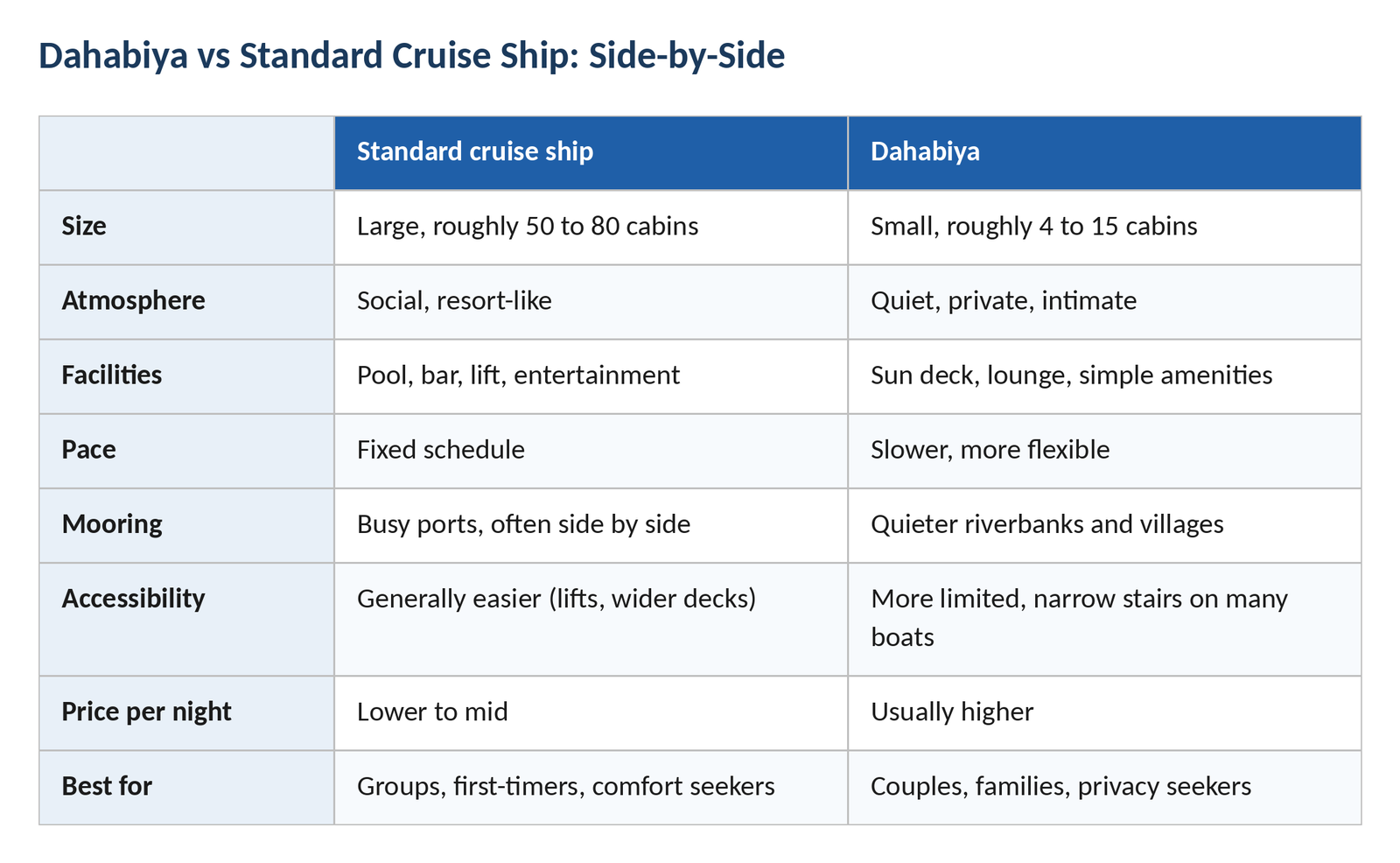
A standard Nile cruise ship is essentially a floating hotel. Most carry somewhere between 50 and 80 cabins, though counts vary by ship, so confirm with the operator. You’ll find a restaurant, a lounge or bar, a sun deck with a small pool, and usually a lift between decks. Cabins are hotel-style, often with large windows or a balcony facing the river.
The experience is organised and predictable. Meals are served at set times, excursions leave on a schedule, and the ship follows a fixed itinerary. Ships are rated by category, from budget through 5-star, and the top end competes with good hotels on service and food. If you’re comparing a luxury Nile cruise with a mid-range one, the biggest differences are usually cabin size, dining quality, and how crowded the decks feel.
One thing to know: in busy ports, ships often moor side by side, so you may walk through another ship’s lobby to reach the shore. That’s normal, but it takes some of the sense of floating alone on the river.
What Is a Dahabiya?
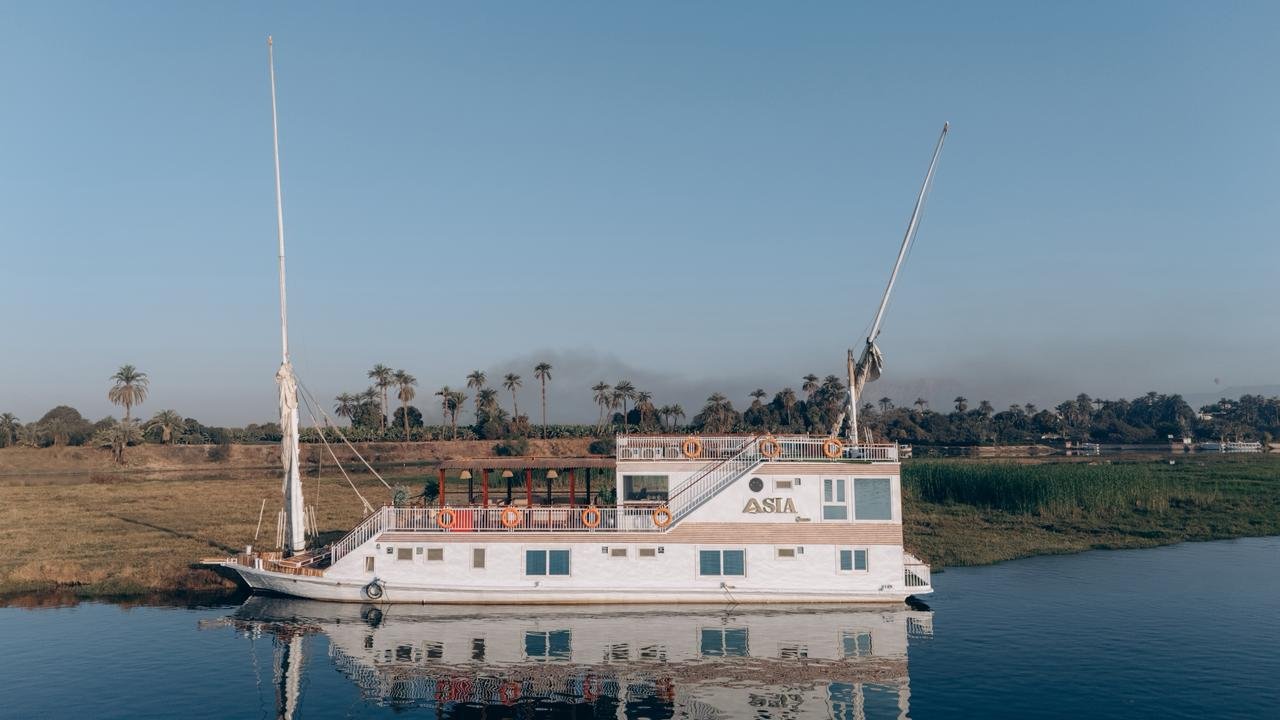
A dahabiya is a traditional Nile sailing boat, historically used for private river journeys. Modern versions keep the look, with tall sails and wooden decks, but add proper cabins and bathrooms. Most carry only a handful of cabins, often somewhere between four and fifteen, so a full boat means a small group, sometimes a single family or friends who’ve booked the whole vessel.
Dahabiyas sail when the wind allows, and many are supported by a small tugboat or engine when it doesn’t. That’s why the pace is slower and the route flexible. Because they’re lighter and quieter, they can moor at peaceful riverbanks, stop near villages, and spend more time away from the busy docks.
If this appeals to you, our guide to the dahabiya Nile cruise experience goes deeper into what a typical trip looks like.

Daily Life: How the Days Differ
On a standard ship, the rhythm is structured. Breakfast, then an early temple visit with a guide, back on board for lunch while the ship sails, an afternoon excursion or time on the sun deck, tea, then dinner and an evening show or music. It’s easy to follow and requires almost no planning. You’re one of many passengers, which means more people at the sites and at meals, but also more choice and energy.
On a dahabiya, the day is looser. The captain and guide adjust timing to the wind, the light, and what the group wants. You might stop for a walk through a village, swim or relax on deck while the boat is moored, or watch the sails go up in the afternoon. Meals are usually shared at one table. There’s less entertainment, and that’s the point: the river itself is the show.
A note of honesty: the slower pace isn’t for everyone. If you need constant activity or hate downtime, a dahabiya can feel quiet.
Comfort and Facilities
Ships win on amenities. A pool, bar, lifts, larger cabins, and more dining variety are standard, and these matter in hot months or for travellers who value convenience.
Dahabiyas win on atmosphere and personal service. With so few guests, the crew learns your preferences quickly. But expect simpler infrastructure: smaller cabins, fewer public spaces, and often no pool. Before booking, ask about air conditioning, hot water, Wi-Fi, and cabin layout, because standards vary widely between boats.
Accessibility deserves a separate check. Many dahabiyas have narrow stairs and uneven gangways, and the temples themselves involve steps and uneven ground. If anyone in your group has limited mobility, tell the operator early and ask exactly how boarding and moving around the boat works.
Itinerary and Route
Both boat types sail the classic stretch between Luxor and Aswan, passing Esna, Edfu, and Kom Ombo. The typical pattern is a shorter trip when sailing downstream and a longer one going upstream, because of the river’s current. Standard ships commonly offer 3-, 4-, and 7-night options. Dahabiyas often run similar lengths but adjust stops to conditions.
To see how a classic route works day by day, read our overview of a Nile cruise from Luxor to Aswan. Also confirm what’s included. Abu Simbel, for example, is usually a separate road or flight excursion, not part of the sailing, and it’s often an optional extra.
Cost: What You Actually Pay For
Dahabiyas generally cost more per night than standard ships, which surprises many people given the simpler facilities. The reason is the ratio of crew and service to guests, plus the exclusivity of a small boat. Standard ships spread costs across many more passengers.
Rather than comparing headline prices, compare what’s included:
- Excursions and entrance fees: included, or paid separately?
- Meals and drinks: full board is typical, but drinks are often extra.
- Tips: usually not included on either type.
- Optional trips: Abu Simbel, hot air balloon, and extra guides.
- Single supplement: relevant if you’re travelling alone.
Prices change with season and availability, so always request a current written quote.
Best Time to Go
Both boats are most comfortable in the cooler months, roughly October to April, when temperatures suit temple visits. Many dahabiyas operate only in the cooler part of the year, while large ships run more widely. Summer is very hot, and a pool matters more then. For month-by-month detail, see our guide to the best time to visit Egypt.
Who Should Choose Which?
Choose a standard cruise ship if:
- You want amenities, activities, and a social atmosphere.
- You’re on a tighter budget or want a clear fixed schedule.
- You’re travelling with a larger group, or mobility is a concern.
Choose a dahabiya if:
- You value privacy, quiet, and a small group.
- You’d like a slower pace and flexible stops.
- You’re happy to trade facilities for atmosphere, and the higher price feels worth it.
Before You Book: Quick Checks
- Confirm the exact cabin count and boat size.
- Ask what’s included and what’s extra.
- Check air conditioning, hot water, and Wi-Fi.
- Confirm the sailing direction and number of nights.
- Ask about accessibility and boarding.
- Get the cancellation terms in writing.
FAQ
Is a dahabiya safer than a cruise ship?
Both operate under the same river regulations. Safety depends more on the operator, the boat’s condition, and the crew than on the type, so ask about safety equipment and crew experience.
Do dahabiyas have air conditioning?
Many do, but not all. Always confirm before booking.
Can I book a whole dahabiya privately?
Often yes, and it’s a popular option for families and friends. Ask the operator about full-boat charters.
Which is better for first-time visitors?
Either can work. First-timers who want structure and amenities often prefer ships. Those who prioritise quiet and privacy often prefer a dahabiya.
Do both stop at the same temples?
Generally yes, along the Luxor–Aswan route. The difference is how you experience the journey between them.
Conclusion
There’s no single best Nile boat, only the one that suits how you like to travel. A standard cruise ship offers comfort, amenities, and value in a lively setting. A dahabiya offers calm, privacy, and a slower, more personal journey. Decide what matters most to you, then ask the right questions before you book.
Not sure which fits you? Tell us your travel dates, group size, and preferred pace, and we’ll suggest suitable boats.

